When Can I Stop Using Treats in Dog Training?
As a positive reinforcement dog trainer, I’m often asked, “When can I stop using treats?”
It’s a fair question. Many of us were taught that dogs are driven to please us (that’s actually a myth), so when using treats in training, it can start to feel like your dog is only listening because there’s a reward involved.
Spoiler: they are. And that’s not a bad thing. It’s how behavior works for all of us (yes, humans, too).
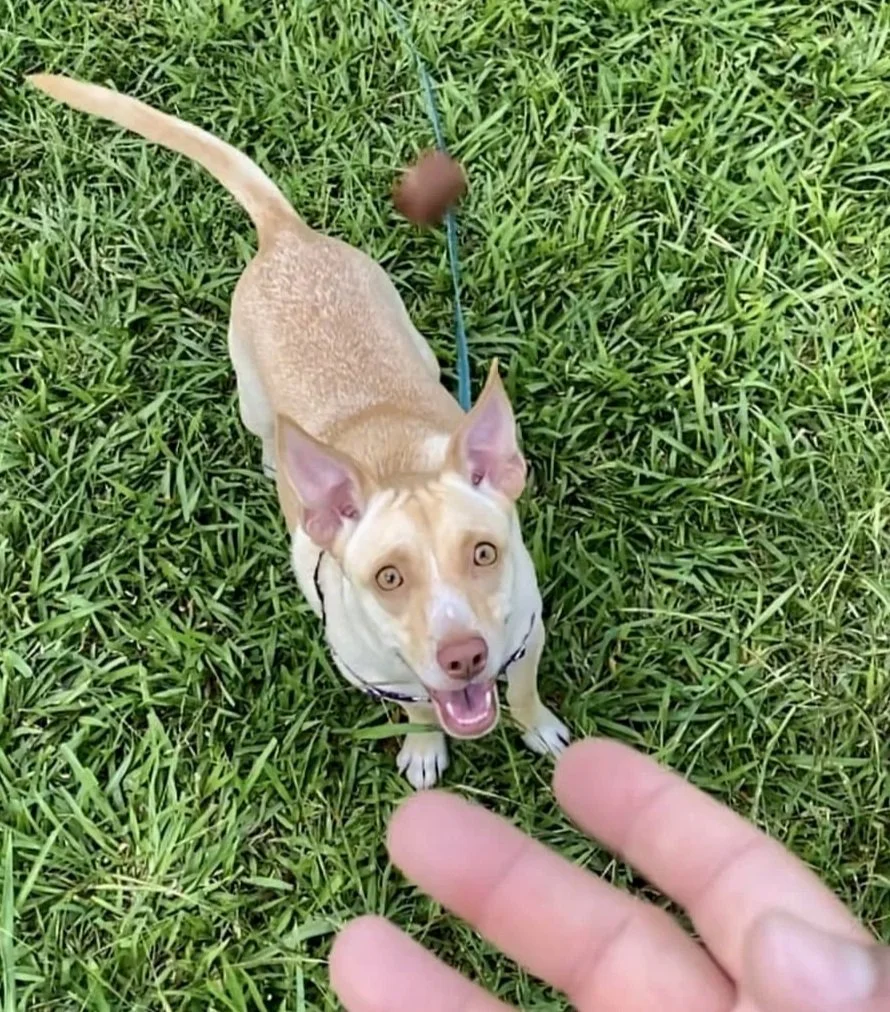
But I get it. I understand the desire to move away from using so many treats all of the time.
The good news is that reducing food rewards should happen. It’s an important part of the training process. The key is doing it thoughtfully though. This isn’t about eliminating rewards altogether. On the contrary, It’s about expanding the types of rewards you use to keep behavior strong and reliable.
Let me explain...
When we’re first training a behavior, food is one of the most efficient and effective teaching tools we have. It’s immediate, rewarding, and easy to deliver, which helps us communicate clearly to our dogs and get the fastest results.
In science terms, food acts as a reinforcer, meaning that it strengthens the behavior and makes it more likely to happen again. It acts as information, teaching your dog that repeating that action is worthwhile. Good things happen when they do it. The more a behavior is reinforced, the stronger and more reliable that behavior becomes.
Once a behavior is fully learned (fully learned means your dog can perform it on cue, the first time they’re asked, in different environments, around various distractions, at least 90% of the time), you can begin to vary your reinforcement. This is when I like to introduce “life rewards”: things your dog genuinely enjoys that aren’t food. Going outside, greeting a friend, chasing a ball, sniffing a tree, and running off leash, can all serve as reinforcement. The leash clipping on after a sit becomes the reward. The door opening after a wait becomes the reward. Access to the environment becomes the reward.
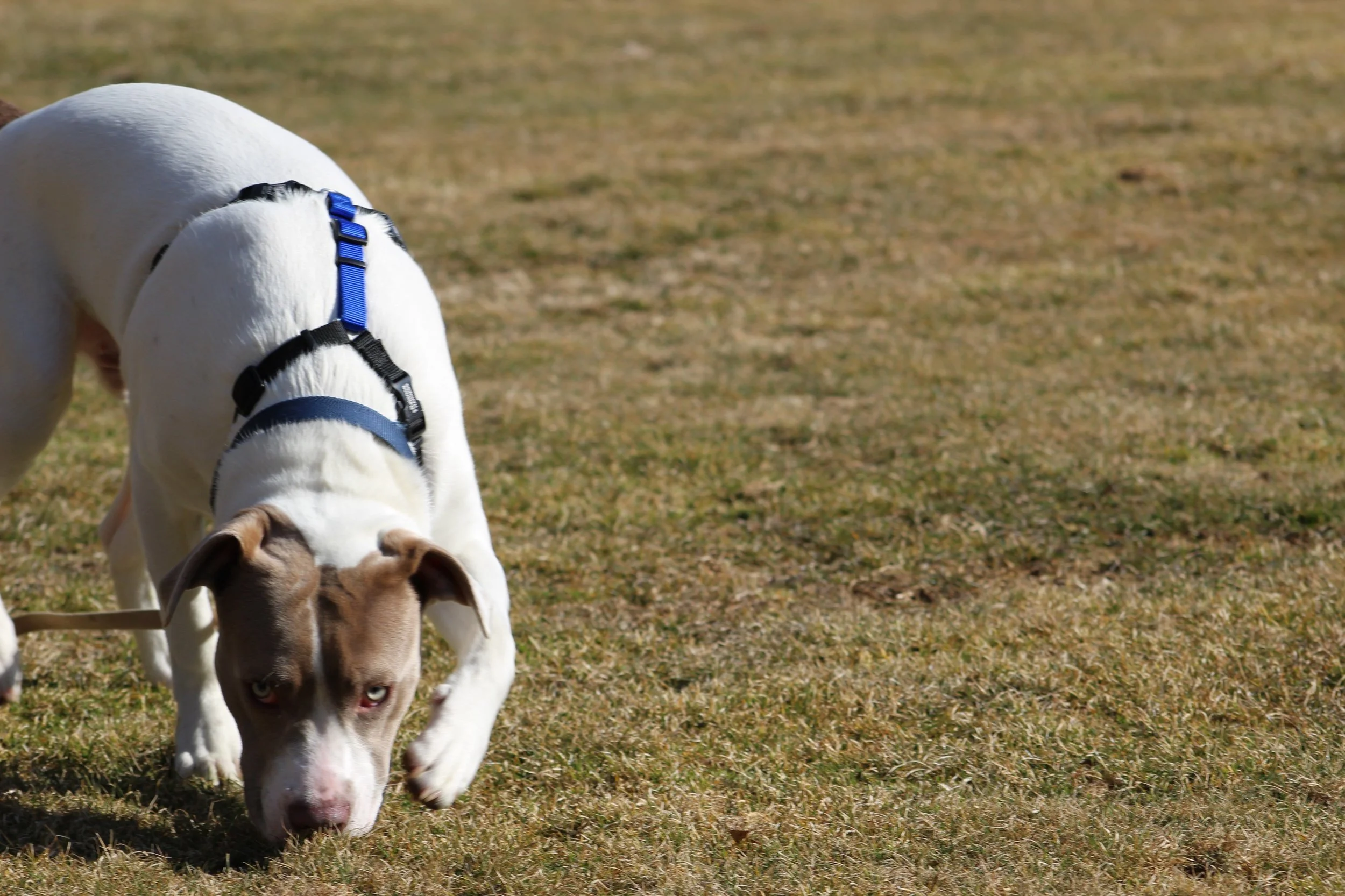
You can also still use food at this point, varying the type, frequency and value of food reinforcement. For example, once your dog reliably sits on cue, sometimes you might give a standard treat. Other times, you might ask for a sit before clipping on the leash for a walk. Occasionally, you might surprise them with a high-value reward like a piece of steak. Sometimes it’s praise or petting.
As long as the outcome is something your dog values, the behavior will stay strong.
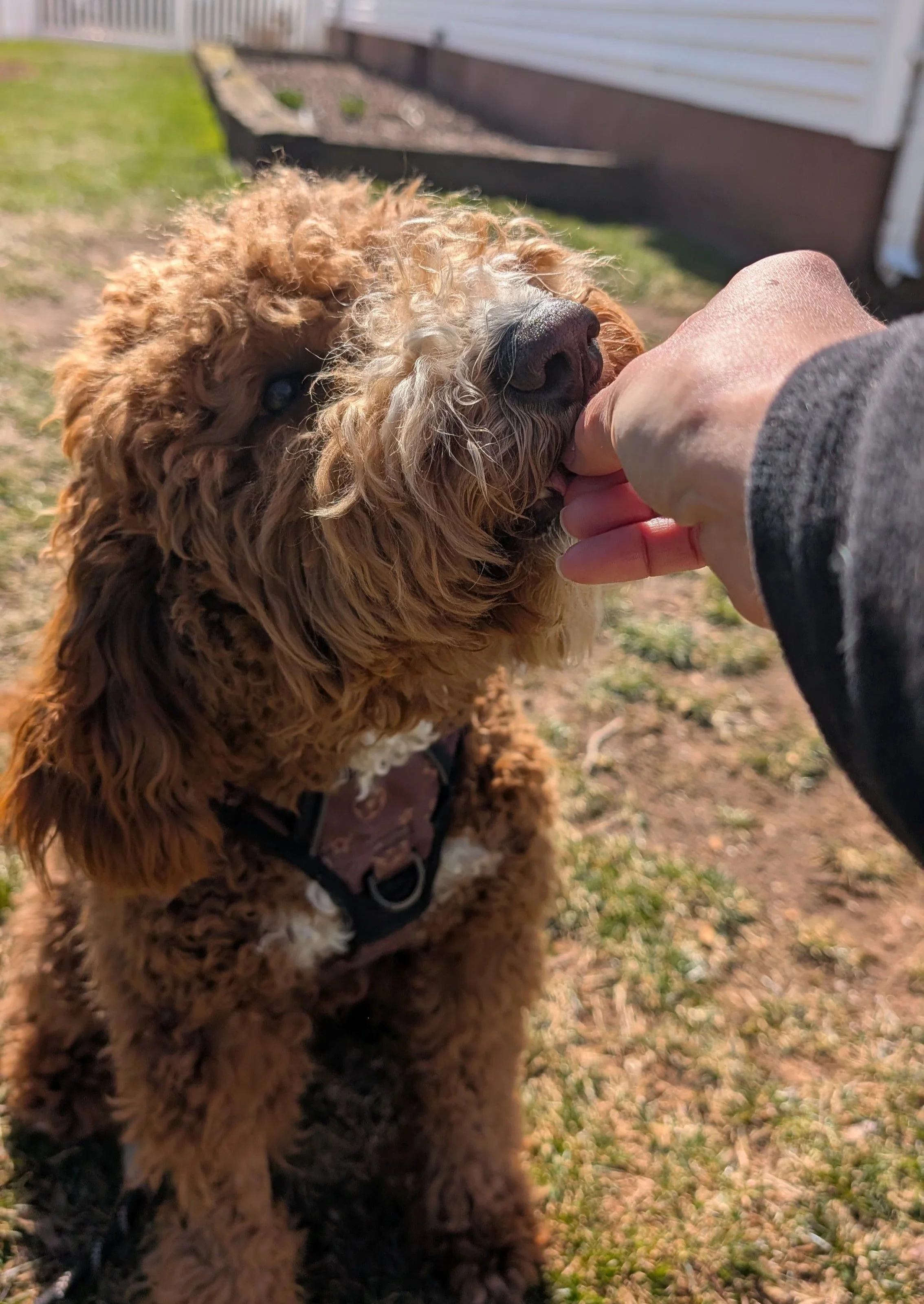
In fact, varying reinforcement often makes behavior even stronger. When we move from rewarding the same way every single time to rewarding unpredictably, we create resilience. The behavior persists because your dog has learned that reinforcement still happens, it’s just not guaranteed every time and it’s not going to be the same thing every time. This is the same principle that keeps people playing games, checking notifications, or buying lottery tickets. Slot machines are a classic example. People keep pulling the lever because they don’t know which pull will pay off. That unpredictability keeps behavior going.
At its core, all behavior is shaped by consequences. We repeat what works. We stop doing what doesn’t. Would you keep going to work if your paycheck stopped? Have you ever quit something because it stopped feeling rewarding? If reinforcement disappears entirely, behavior will eventually fade. Not because of stubbornness or defiance, but because that’s the science of behavior.
So yes, over time you can use fewer food rewards and incorporate other types of reinforcement. But if you want your hard training work to last, the goal shouldn’t be to stop rewarding your dog altogether. The goal should be to weave in a variety of rewards to keep behaviors strong.
With wags and aloha,
Cori Tufano- CPDT-KA, FDM, CSAT, FFCP